
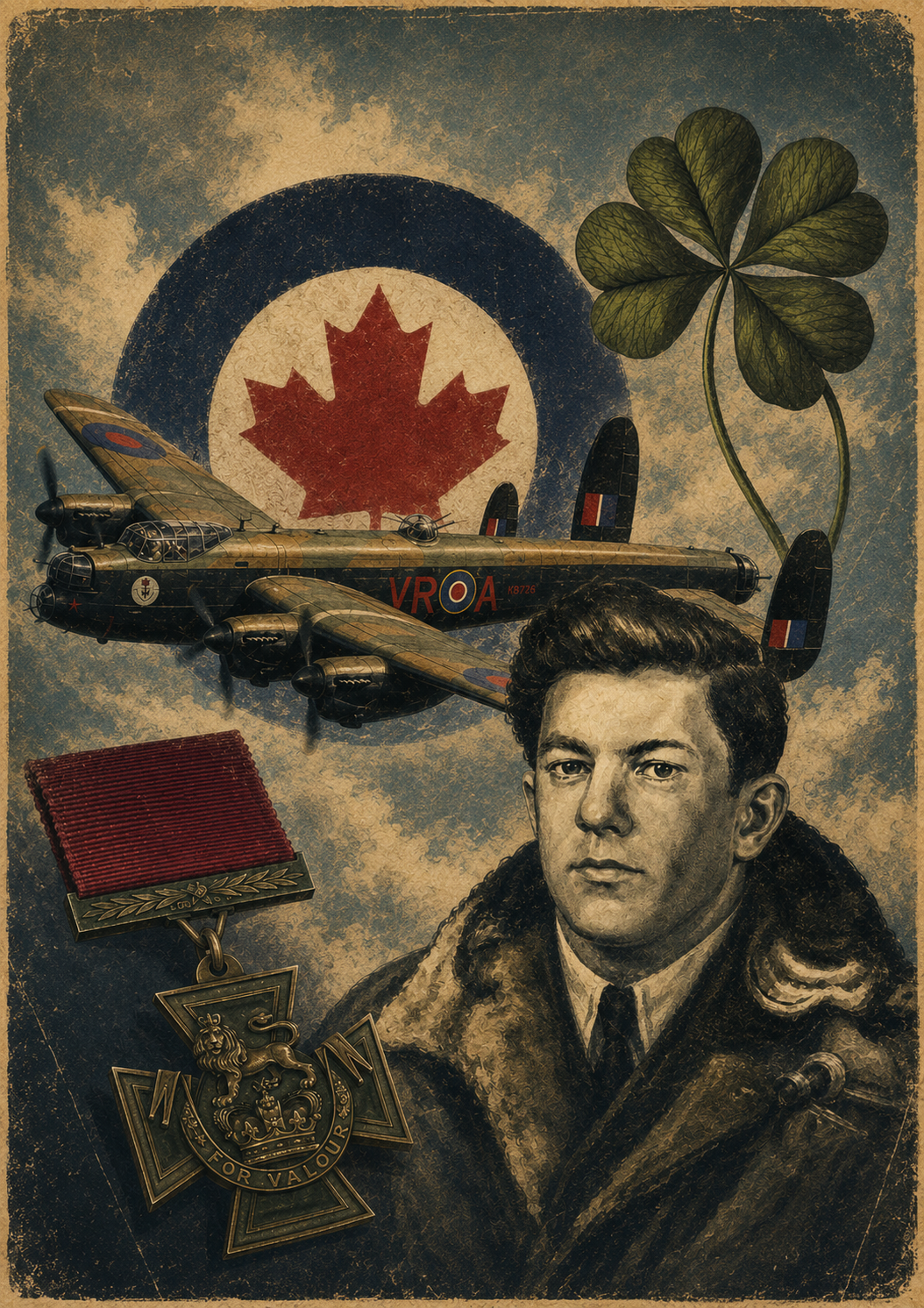
Andrew Charles Mynarski
Andrew Charles Mynarski was born on October 14, 1916, in Winnipeg, Manitoba. Known for his quiet nature, sense of humour, and passion for woodworking and furniture design. He joined the Royal Canadian Air Force (RCAF) on September 29, 1941. After training as an Air Gunner, he was assigned to the 419 “Moose” Squadron, flying Lancaster bombers from RAF Middleton St. George, England.
On the night of June 12–13, 1944, Pilot Officer Andrew Mynarski served as the mid-upper gunner aboard a 419 Squadron RCAF Avro Lancaster during a bombing mission over Cambrai, France. While waiting to leave Andrew found a four-leaf clover in the grass near the planes. He insisted that his closest buddy in the crew, tail gunner Pat Brophy should have it. After the aircraft was attacked by a German night fighter, two engines failed and a fire engulfed the bomber. Ordered to abandon the aircraft, Mynarski discovered that the rear gunner, Flying Officer Pat Brophy, was trapped in his turret. Despite intense flames and his own clothing and parachute catching fire, Mynarski repeatedly attempted to free Brophy but was unsuccessful. Only after Brophy signaled there was nothing more, he could do and wanted Mynarski to leave the aircraft. Mynarski parachuted to the ground severely burned and later died from his injuries. For his extraordinary bravery and selfless attempt to save his crewmate, Mynarski was posthumously awarded the Victoria Cross. Remarkably, Brophy survived the crash and returned to England.
Today, his Victoria Cross is displayed at Air Command Headquarters in Winnipeg, and his legacy is honoured through a 10-foot bronze statue at Middleton St. George, England. His selfless bravery remains one of the most inspiring acts in Canadian military history.